 Little Gift List
How to Avoid Duplicate Christmas and Birthday Presents
Two relatives buy the same toy, two friends choose the same book or you discover that somebody already owns the present you carefully picked. Duplicate gifts are often a coordination problem rather than a lack of thought.
There are two distinct situations to manage. One is accidentally buying something twice yourself. The other is several people independently choosing the same gift. A useful system handles both without revealing every surprise to the recipient.
In this article
Find out what the recipient already owns
Before choosing a gift, check relevant details with the person or, for a child, an appropriate parent or carer. Ask whether they already own the item, which editions they have and whether there are any important size or compatibility requirements.
For example, a person might want the next book in a series rather than the one they read last month. A game or accessory may need to work with a particular device.
Agree how different gift buyers will coordinate
A shared list of suggestions is useful only if people can tell what has already been chosen. Agree a simple approach before shopping. A trusted adult could coordinate purchases for a child, or a group might use a private wishlist where the invited buyers can see when items have been taken.
If you are communicating by message, ask buyers to confirm their choice privately with the coordinator. Do not put purchase confirmations in a group that includes the person receiving the surprise.
Use private wishlist purchase marking
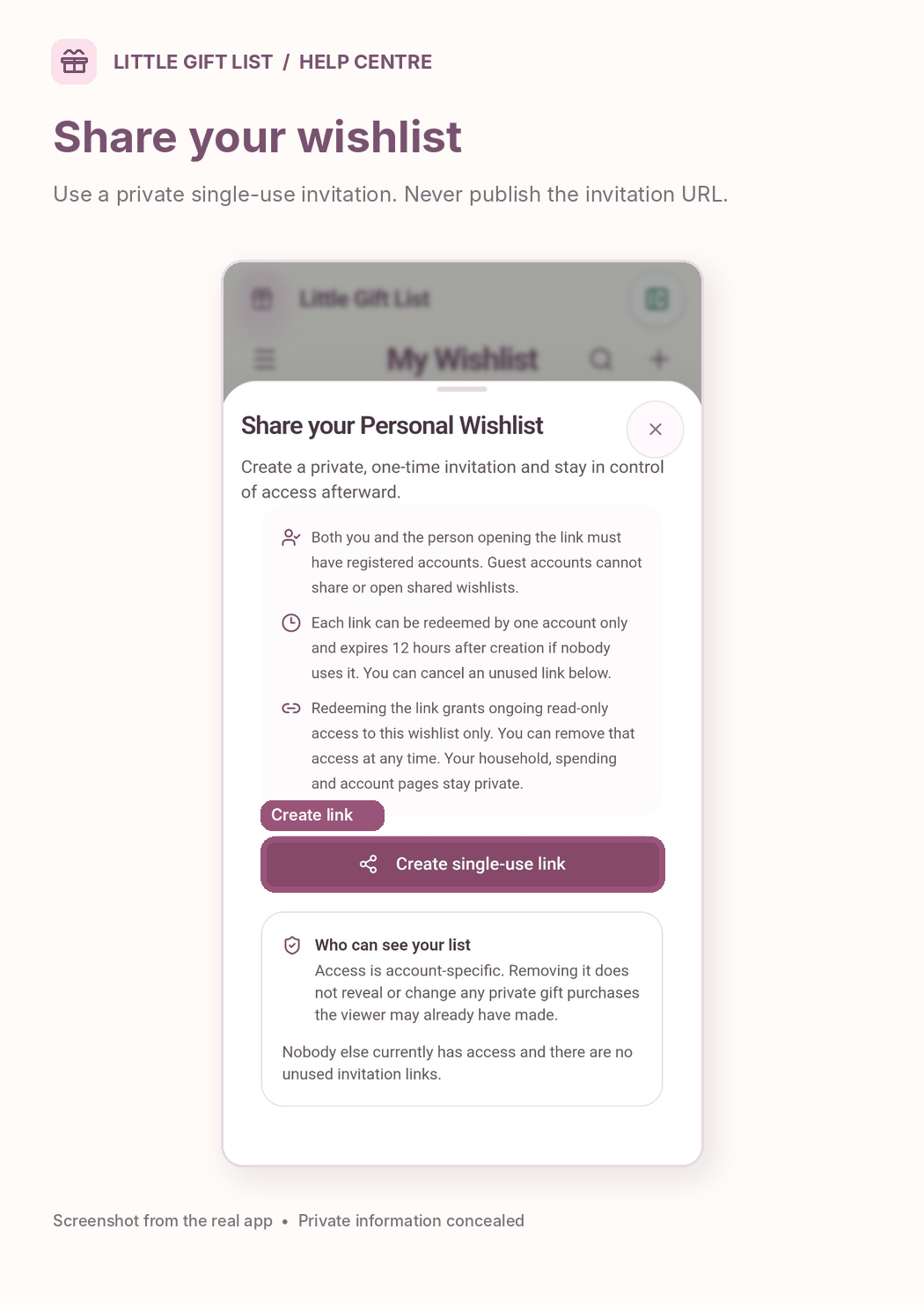
Little Gift List lets a registered wishlist owner invite registered friends and family through private invitations. Invited viewers can manually mark an item as bought so that other invited viewers know it has been purchased.
The owner's personal wishlist stays unchanged to protect the surprise. This is not automatic retailer tracking, and it does not prevent an uninvited shopper from buying the same item independently.
Read how to share a wishlist privately for the invitation process.
Make a clear agreement about when to mark a gift
If two people are both considering the same item, agree who intends to buy it before placing the orders. Mark a gift as bought when it really has been purchased, not just because you are thinking about it.
For a cancelled purchase, tell the other relevant buyers privately so they can coordinate again. If an invitation or marking action is not working, do not assume the rest of the group knows what happened.
Check your own records before buying again
You may have ordered a gift during a sale and forgotten it when you see another offer. Search your own private buying plan and recent orders before purchasing a duplicate.
Record a shared gift once with notes about its intended recipients. If you intentionally buy matching presents, make the separate recipients clear. Our Christmas present tracking article explains how to distinguish ideas, orders and delivered gifts.
If duplicate presents still happen
Keep the reaction kind. Check retailer return arrangements and whether a gift receipt is available. If appropriate, agree an exchange with the recipient or consider using an unopened item for a different suitable occasion.
Do not assume another person can return a gift without the purchaser's details or that every retailer permits an exchange.
Frequently asked questions
Can a wishlist guarantee no duplicates?
No. It helps buyers coordinate when they use it and update purchases accurately.
Will the wishlist owner see who bought a gift?
Their personal wishlist remains unchanged when invited viewers mark gifts bought.
How do I avoid duplicates for a child?
Agree with the parent or carer on suitable ideas and a private way of coordinating purchases.
Can I save gift history?
Little Gift List can keep previous gifts and useful person details available for future planning.
Keep the surprise, share the practical details ♡
A small amount of coordination can make gifting more thoughtful for everyone. Keep buying decisions private where needed and give people room to choose their own presents.