 Little Gift List
How to Manage Gift Shopping With Executive Dysfunction

Starting a shopping task, switching between choices or finishing an order can be difficult for some people with executive functioning difficulties. Experiences vary. This guide offers practical structure rather than clinical assessment or treatment.
In this article
Define a visible finish
Replace sort Christmas with a concrete outcome: choose one gift, check one order or wrap one present. Write the minimum information needed to begin. A task with a known result may be easier to return to than one without a boundary. Decide which optional details can be left until another time.
Separate browsing from deciding
Browsing generates possibilities; deciding means comparing cost and suitability. Save a limited shortlist, then choose at another appropriate time. If two options are equally good, choose by usefulness or lower full cost. Avoid keeping many near-identical options open. A saved idea does not have to become a purchase.
Prepare for checkout
Check preferences, model or size if relevant, price and delivery estimate. If you need an answer from someone, record that as the next action. Mark a gift bought only when the order is placed. Record the purchase when practical, including useful details. You can return to delivery checks separately.
Reduce switching between tasks
Group similar jobs where helpful: check deliveries together or review one person's ideas. A timer you set yourself, written note or supportive person may help. Choose a method that fits you. A rigid system creating more work is not automatically useful. Allow yourself to stop at a clear boundary.
Restart without recreating everything
After a gap, check the most urgent unfinished job and reconcile purchases with receipts. You do not need to reconstruct every browsing session. If a gift is marked planned but you find an order confirmation, update that record and identify delivery as the next action. Focus on what is now true rather than the missed routine.
Put your plan into practice
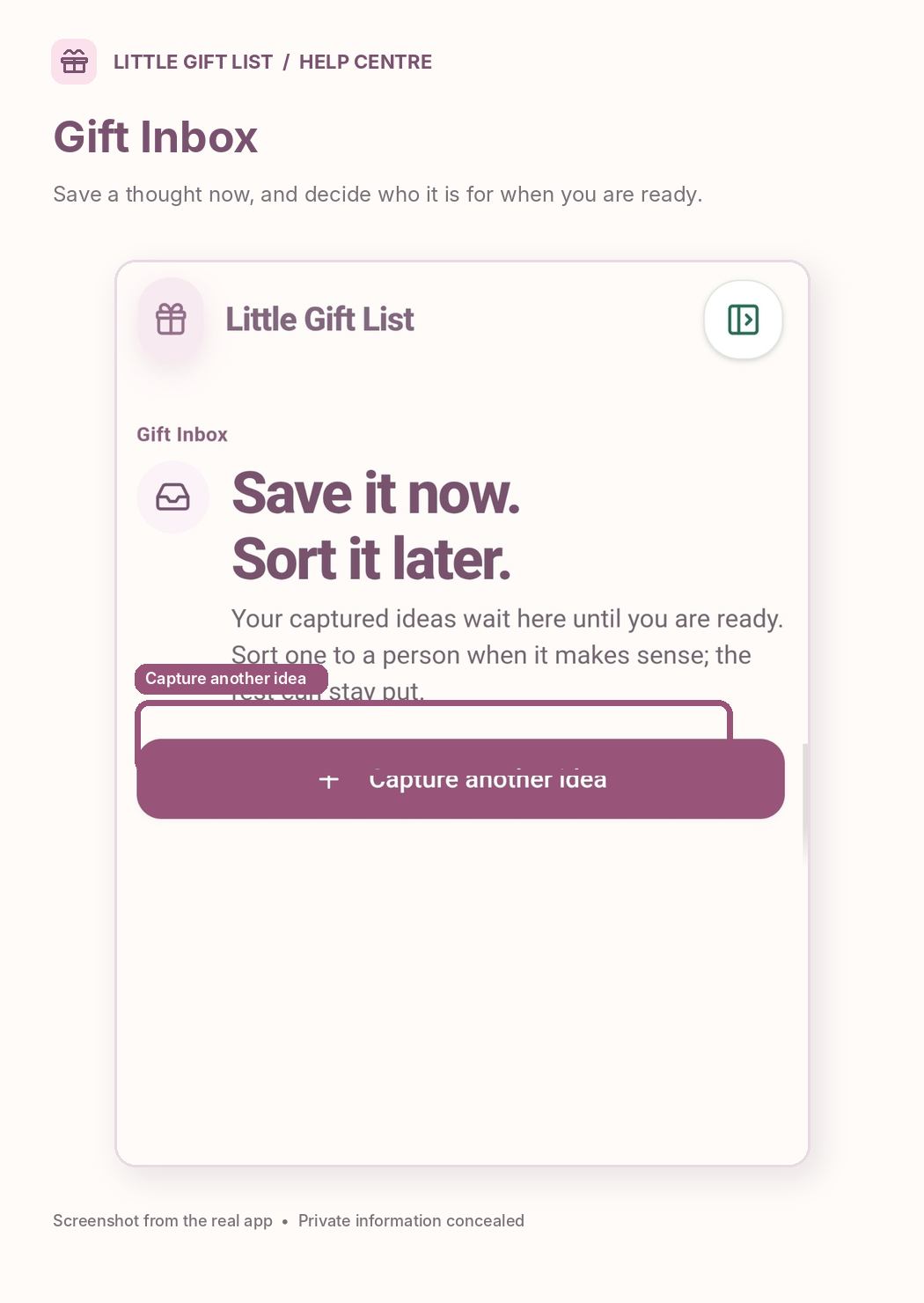
Little Gift List offers free account-based gift planning, including a place to save ideas, record purchases and organise them by person and occasion. Start with one person and record the useful details you already know. A saved idea does not mean you have to buy it. If you intend to buy it, check the affordable allowance, planned costs and current checkout price first. Keep surprise details private. When an order arrives, update progress and any relevant storage location. If something changes, correct the existing record instead of starting another list.
Before adding another task, check whether it will help you make a decision or remember something important. It is fine to leave fields blank when information is unknown, and to add details only as they become useful. A list is there to support the choices you make, not to determine how much you should buy or how you ought to celebrate. Use a separate calendar or reminders for commitments outside gift planning.
Read our "remembering gifts with ADHD" article or explore the gift planning guide for more details.
Frequently asked questions
What if I cannot choose?
Use a small shortlist and compare suitability and affordable full cost.
Can I save an incomplete idea?
Yes. Add details later.
Must I use a strict daily schedule?
No. Choose a routine that works for you.
Is this medical advice?
No. Seek individual professional support if difficulties affect your life.
Thoughtful gifts, your way ♡
Choose the next useful action rather than setting yourself another complicated target. Adapt the approach when circumstances change and leave optional tasks out when they do not fit your life.