 Little Gift List
How to Remember Gifts When You Have ADHD
A gift hint can disappear before you find somewhere to write it down. Some people with ADHD find it difficult to keep intentions, purchases and storage locations in mind. This guide offers practical organisation options, not diagnosis or treatment.
In this article
Capture before organising
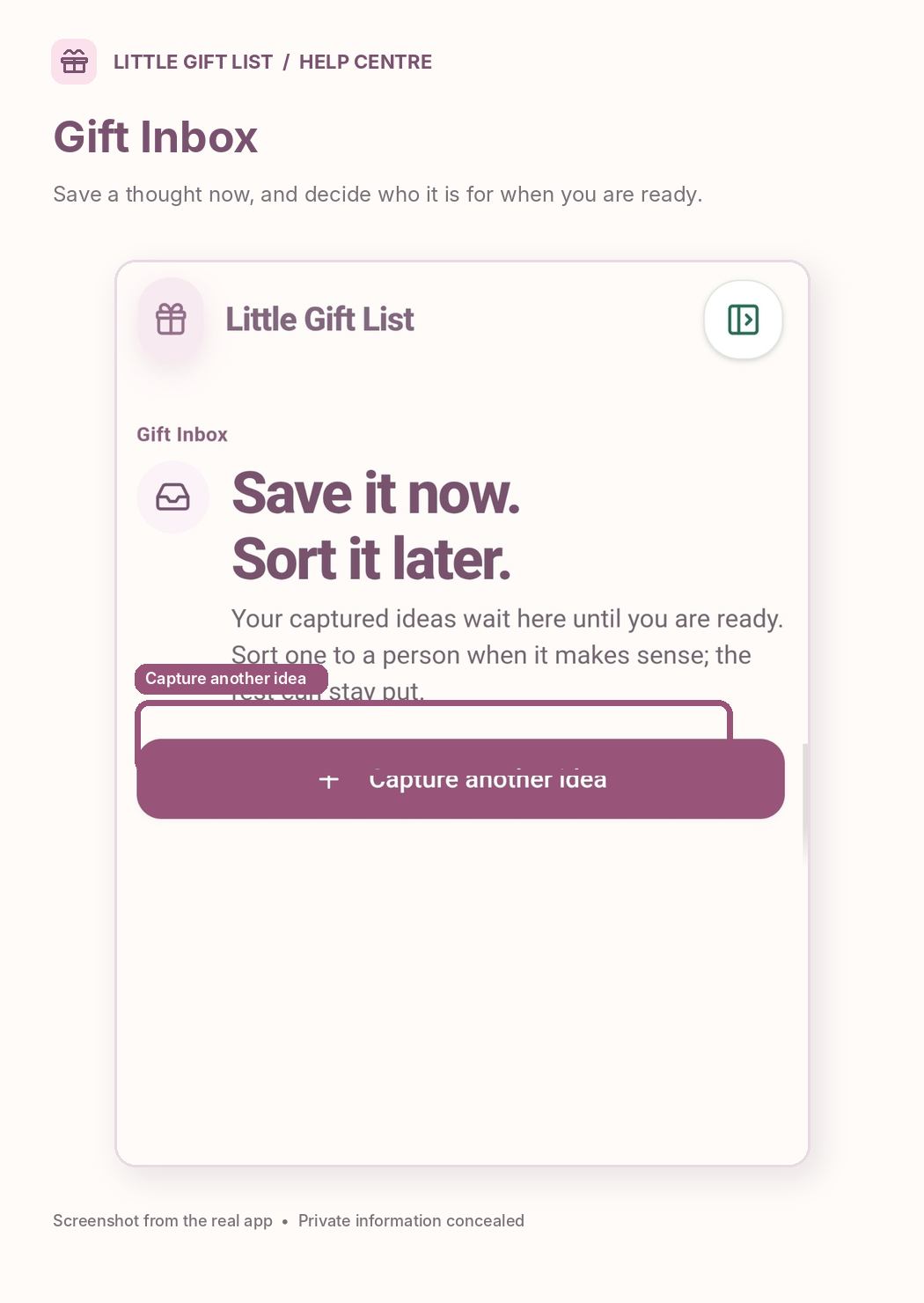
When somebody mentions a book, note the person and title before searching for the product. Gift Inbox can hold an unassigned thought. If you are busy, record only the useful words and return later. Do not make completing an entire form a requirement for saving an idea. A brief note that you can understand is enough.
Write down the next action
Instead of a vague instruction to buy a birthday gift, write check whether Jo owns volume two, ask about shoe size or find the order confirmation. When an action is complete, replace it with the next real job. This helps distinguish what has happened from what you intend to happen. Keep completed purchases visible in the appropriate record.
Use events as cues
Try updating the gift record when you place an order, open a parcel or put it away. Record the location as you store it. If you miss the cue, reconcile your records with receipts later. Choose a moment that works in your routine rather than creating several reminders that you find difficult to notice.
Retrieve before shopping
Before buying, open the relevant person's list and check previous orders. Before wrapping, check delivered gifts and locations. If an item is missing, confirm it arrived before searching every cupboard. Do not assume an order was delivered simply because the payment left your bank. Keep the next action specific and achievable.
A fictional example
Alex saves a puzzle idea for Sam with the note likes maps. Later Alex assigns it to Sam, checks the total price and buys it. When the parcel arrives, Alex adds its cupboard location. On the next review, the task is wrapping, not buying another puzzle. If the list was not updated, an order email is a useful starting point.
Put your plan into practice
Little Gift List offers free account-based gift planning, including a place to save ideas, record purchases and organise them by person and occasion. Start with one person and record the useful details you already know. A saved idea does not mean you have to buy it. If you intend to buy it, check the affordable allowance, planned costs and current checkout price first. Keep surprise details private. When an order arrives, update progress and any relevant storage location. If something changes, correct the existing record instead of starting another list.
Before adding another task, check whether it will help you make a decision or remember something important. It is fine to leave fields blank when information is unknown, and to add details only as they become useful. A list is there to support the choices you make, not to determine how much you should buy or how you ought to celebrate. Use a separate calendar or reminders for commitments outside gift planning.
Read our "Christmas planning with ADHD" article or explore the gift planning guide for more details.
Frequently asked questions
Can I save an incomplete idea?
Yes. Add missing details later.
What if I forget a review?
Check the real gift or order and correct the existing record.
Should I set many reminders?
Choose reminders you find useful; there is no required schedule.
Does a planner treat ADHD?
No. It is a general gift organisation tool.
Thoughtful gifts, your way ♡
Choose the next useful action rather than setting yourself another complicated target. Adapt the approach when circumstances change and leave optional tasks out when they do not fit your life.