 Little Gift List
How to Reduce the Mental Load of Buying Presents
A present represents more than the moment of paying. Somebody remembers the date, notices preferences, compares choices, checks orders and arranges delivery or wrapping. When those tasks are spread across a family, one purchase may involve a long chain of invisible work.
In this article
Identify the whole job
List the steps from choosing a gift to getting it to the person. Notice which actions still depend on you remembering them. A shopping list shows what to buy but not necessarily who checks delivery or returns an unsuitable item. Make the whole responsibility visible before trying to divide the tasks.
Agree a clear owner
When another adult agrees to help, agree the outcome they own rather than handing them a series of instructions. They might organise a birthday present within a limit, check delivery and confirm when it is ready. Respect different methods where the result works for everyone. Agree what happens if the plan changes.
Share information appropriately
A private gift plan can hold your own purchases. Agree updates with other buyers in a suitable private conversation. Do not share passwords or assume that personal wishlist invitations provide access to every planner. A wishlist helps coordinate wishes; it is not a general household task management service. Keep surprise details away from recipients.
Make recurring decisions once
If relatives agree a gift exchange limit or preferred celebration, record the agreement and review it next time. Save appropriate information such as sizes or hobbies. Avoid asking the same questions when answers are already known, while allowing preferences to change. Decide who will check the information rather than assuming it remains correct.
Remove optional work
Review jobs that exist because of expectations nobody has discussed. Adults might prefer one shared exchange or no gifts; relatives may be happy with ordinary gift bags. Removing an unnecessary job is different from becoming faster at doing it. A smaller plan can be a positive result. Discuss changes with the people affected.
Put your plan into practice
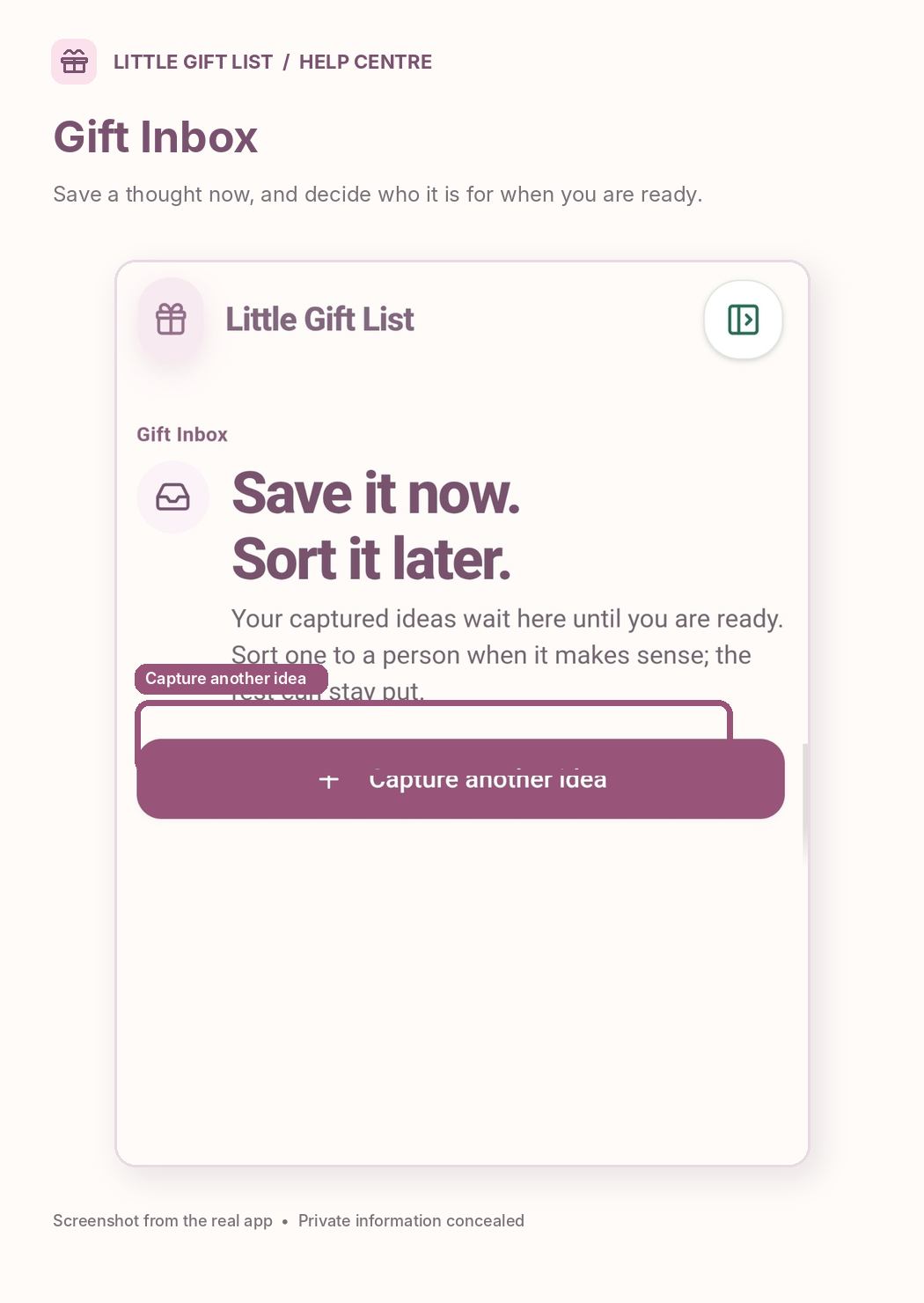
Little Gift List offers free account-based gift planning, including a place to save ideas, record purchases and organise them by person and occasion. Start with one person and record the useful details you already know. A saved idea does not mean you have to buy it. If you intend to buy it, check the affordable allowance, planned costs and current checkout price first. Keep surprise details private. When an order arrives, update progress and any relevant storage location. If something changes, correct the existing record instead of starting another list.
Before adding another task, check whether it will help you make a decision or remember something important. It is fine to leave fields blank when information is unknown, and to add details only as they become useful. A list is there to support the choices you make, not to determine how much you should buy or how you ought to celebrate. Use a separate calendar or reminders for commitments outside gift planning.
Read our "planning when overwhelmed" article or explore the gift planning guide for more details.
Frequently asked questions
What is the mental load of gifting?
The noticing, remembering and organising that makes a gift happen.
Can someone access every private plan?
Do not assume private plans are shareable; agree appropriate ways to coordinate.
Must I organise every relative's gift?
No. Agree the commitments you choose to take on.
How can I make next year easier?
Keep useful preferences and prior gift records, and review them before buying.
Thoughtful gifts, your way ♡
Choose the next useful action rather than setting yourself another complicated target. Adapt the approach when circumstances change and leave optional tasks out when they do not fit your life.