 Little Gift List
How to Buy Christmas Presents Throughout the Year
Buying Christmas presents gradually can spread the shopping over several months. It can also lead to unnecessary purchases if every offer seems like a reason to add something. The useful approach is to decide who you are buying for, what you can afford and whether a particular gift genuinely makes sense now.
In this article
Make a shortlist before browsing
Keep a few ideas for each person based on their interests. Distinguish ideas from items you intend to buy. When an offer appears, check whether the gift fits an existing plan. A good price on something nobody wants is not necessarily a saving. Ask about changing interests or sizes before committing.
Choose purchases that make sense early
A wanted book, suitable keepsake or familiar hobby accessory may be reasonable to buy ahead. Products with short expiry dates, rapidly changing sizes or uncertain compatibility can be less suitable. Check manufacturer storage instructions and any relevant safety requirements. Do not assume a gift will remain appropriate several months later.
Check return periods and warranties
Read retailer terms before buying something for a future celebration. A return or exchange window may end before the recipient opens the gift. Keep useful purchase information and check items when appropriate. Do not assume a shop will accept a return months later simply because the item was intended as a Christmas present.
Spread costs without spending the same money twice
Suppose you set aside £25 a month for gifts. After four contributions you have £100, before any purchases. If you spend £35, only £65 of that money remains. If another £30 is committed to planned gifts, £35 is unallocated. Check your actual savings balance and avoid spending future contributions that have not arrived.
Record and store gifts as you buy them
Keep a record of each purchased gift, intended recipient, actual cost and hiding place. Use suitable safe storage and update the record if an item moves. Review what you own before shopping again. If preferences change, consider whether the gift can be returned, reassigned appropriately or donated.
Keep the gift details in one place
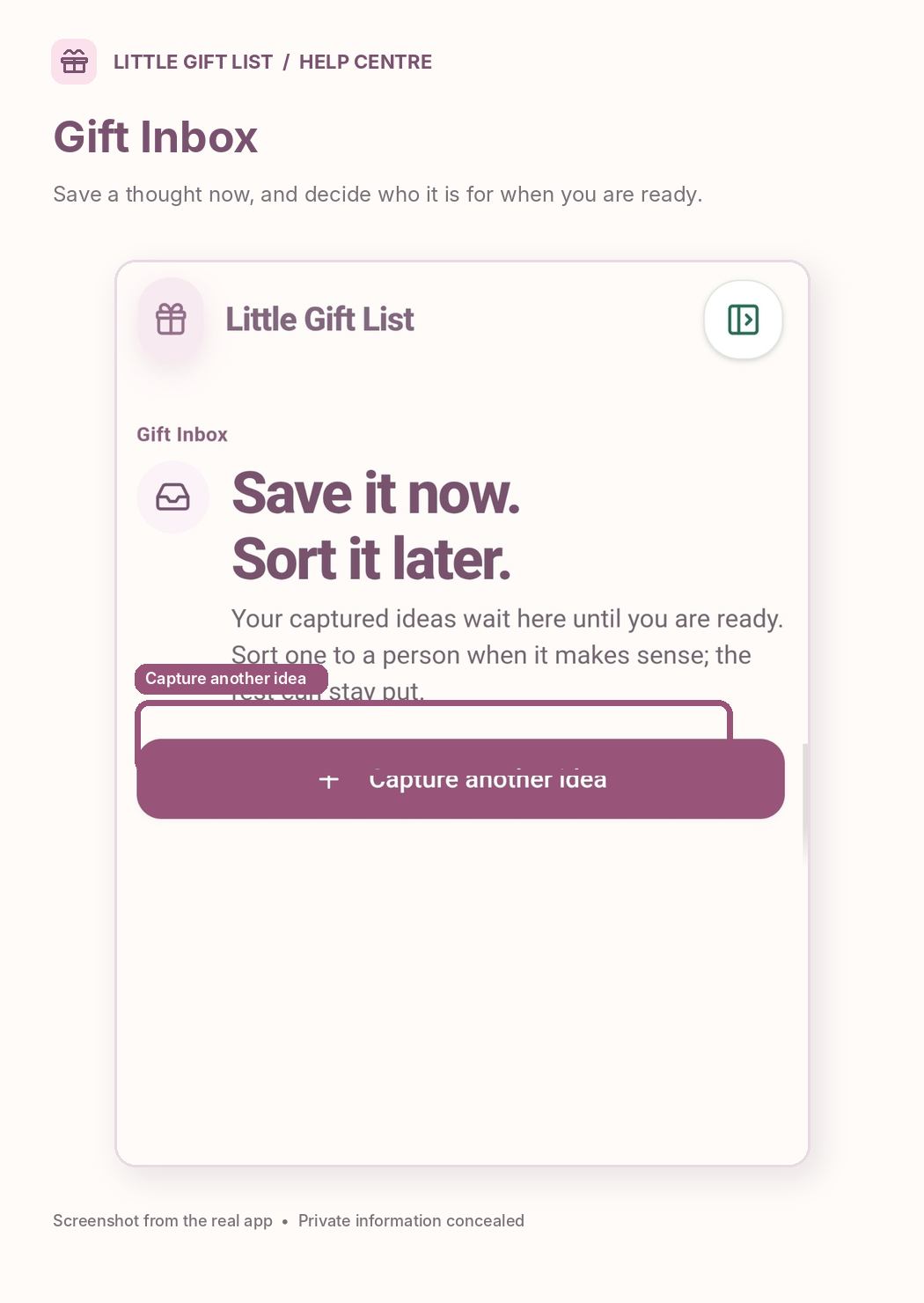
Little Gift List offers free account-based gift planning and a personal wishlist. Save useful ideas, keep them with the intended person and occasion, and record the actual purchase when it happens. Check the current price, stock, delivery estimate and any offer conditions before buying. Keep actual savings and wider household expenses in your chosen financial system rather than treating a gift budget as a bank balance.
A saved gift idea is not an obligation to buy it. Review the plan when the date approaches and remove anything that is no longer appropriate. If you need to coordinate with other people, agree responsibilities and contributions privately rather than assuming everyone will follow the same plan. You can use your ordinary calendar for reminders and booking deadlines. Keep surprise details out of lists visible to recipients.
Read our organising a gift stash guide for related ideas, or visit the Little Gift List guide to learn about the relevant tools.
Frequently asked questions
Is buying Christmas gifts early always cheaper?
No. Compare actual prices and only buy suitable items.
What should I avoid buying far in advance?
Consider expiry, changing sizes, compatibility and return windows.
How do I remember what I bought?
Record the purchase and storage location when it happens.
Can I start with a gift idea rather than buying?
Yes. Save ideas and review them when appropriate.
Make each occasion your own ♡
Choose the celebrations that matter to you, keep the costs affordable and allow plans to change. One thoughtful idea and a clear next action can be enough.